
The Leak Is Probably at the Top: Chimney Crown and Cap Damage in New Jersey
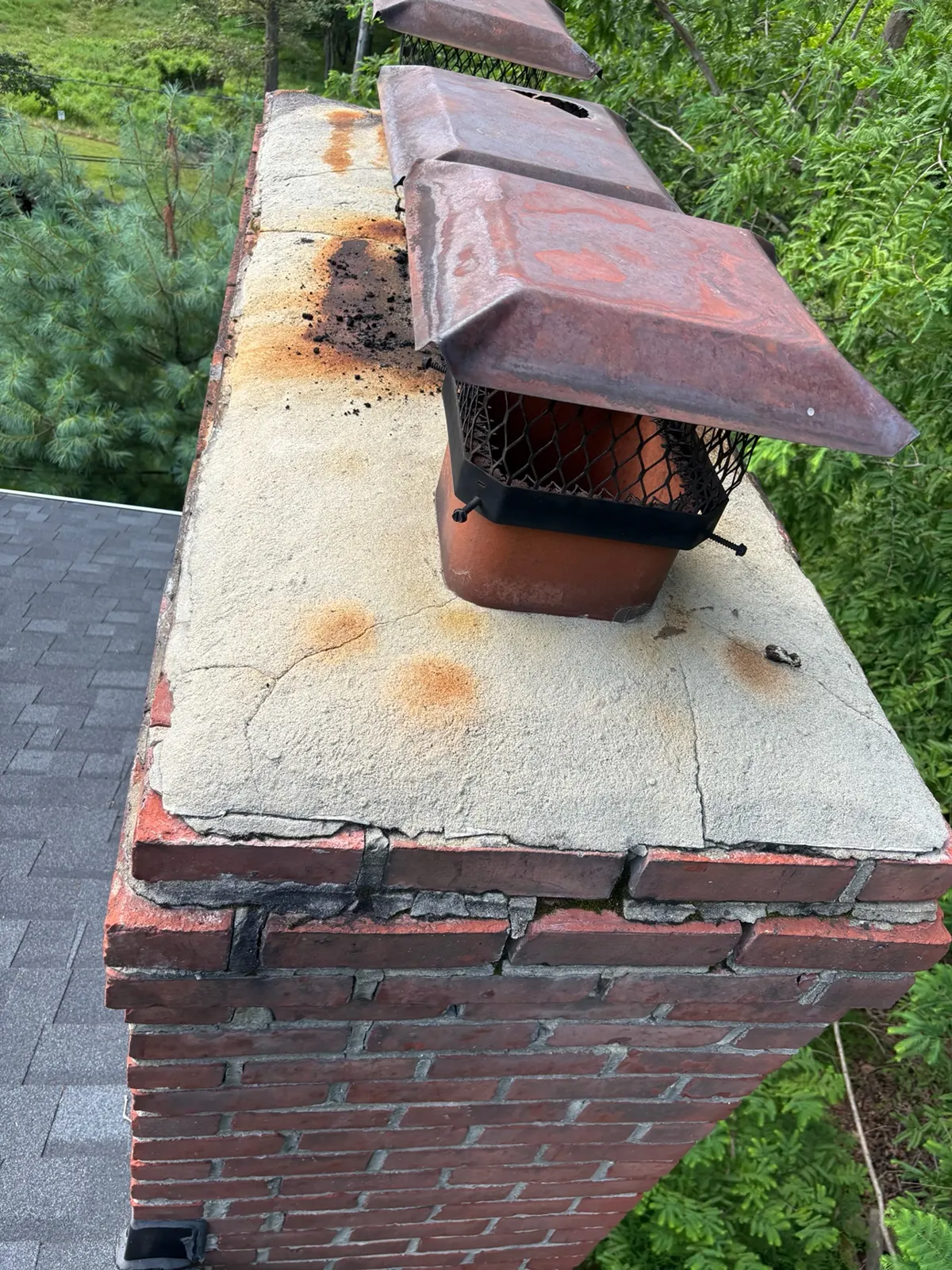
When a homeowner calls about a ceiling stain near the fireplace, they usually expect to hear the word "roof." More often, the water started its journey at the very top of the chimney — through a crown cracked by twenty winters, or straight down an uncapped flue. The top of the chimney is its roof, its gutter and its front door all in one, and in New Jersey weather it is the hardest-working few square feet of the house.
The crown: a small slab with a big job
The crown is the concrete slab that caps the masonry at the top of the stack, sloping outward so water sheds off the chimney instead of soaking in. Crowns fail slowly and predictably: hairline cracks from curing and freeze-thaw, then wider cracks, then water wicking into the brick below every rain. From the ground, a failing crown looks fine — which is why crown damage is usually discovered from the roof, during a sweep or inspection, years after it started. A sound crown with hairline cracks can be sealed with a flexible crown coating; a crown that is cracked through, crumbling or poured flat (a common builder shortcut) needs to be rebuilt with a proper slope and overhang.
The cap: the cheapest insurance on the house
An uncapped flue is an open pipe into your home. Rain falls straight in — onto the damper, the smoke chamber and the flue walls — and animals move in: raccoons, squirrels, and chimney swifts that are legally protected once nesting, which turns a simple exclusion into a waiting game. A fitted stainless cap stops water, animals and downdrafts, and keeps sparks in. Galvanized caps are the false economy here: they rust out in a handful of years, faster at the Shore, while stainless typically outlasts the mortgage. If your chimney has a rusty cap, no cap, or a cap that blew off in a nor'easter, this is the first fix on the list.
How to spot top-of-chimney trouble from inside
You cannot see the crown from your yard, but water leaves signatures: a musty smell from the fireplace after rain, rust streaks on the damper or firebox walls, white mineral crust (efflorescence) on the exterior brick, spalling — brick faces flaking off — near the top of the stack, and the classic ceiling stain on the wall the chimney runs through. Any one of these earns a professional look from the roof, because the fix is small at the top and large once water has worked down through the masonry for a few seasons.
What the repair visit looks like
Crown and cap work is measured in hours, not days. We photograph the top of the chimney first — you see what we see — then the work is one of three scopes: seal a sound-but-cracked crown, rebuild a failed one, and fit a stainless cap sized to your flue (or a multi-flue cap covering the whole top, which also protects the crown beneath it). While we are up there, flashing and the top courses of mortar get checked, because repairing the crown over failing joints below it is money half-spent.
The bottom line
Water is the enemy of every chimney in New Jersey, and it almost always enters at the top. A sound crown and a stainless cap are the two fixes that prevent the expensive ones — repointing, rebuilds, interior repairs. Eagle Chimney Services checks the crown and cap on every sweep and inspection across our 163 New Jersey communities. Call (855) 424-6217 and find out what the top of your chimney actually looks like.
Need a Hand With Your Chimney?
Call (855) 424-6217 — phones answered 24/7, service Sunday through Friday across 163 New Jersey communities.